Why Resistance Bands Snap Mid-Workout — and How to Actually Prevent It
Quick Answer: Resistance bands snap mainly from UV/heat degradation, tiny nicks from jewelry or nails, and over-stretching past the manufacturer’s recommended range — not random bad luck. A 10-second stretch-and-inspect check before every use catches most failures before they happen.
A snapped band whipping back at your face or eyes isn’t a rare freak accident — it’s usually the predictable end point of small damage that built up over weeks and went unchecked.

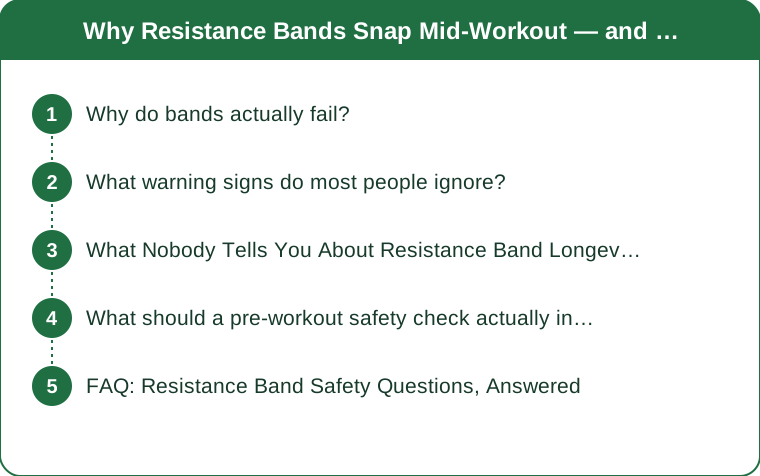
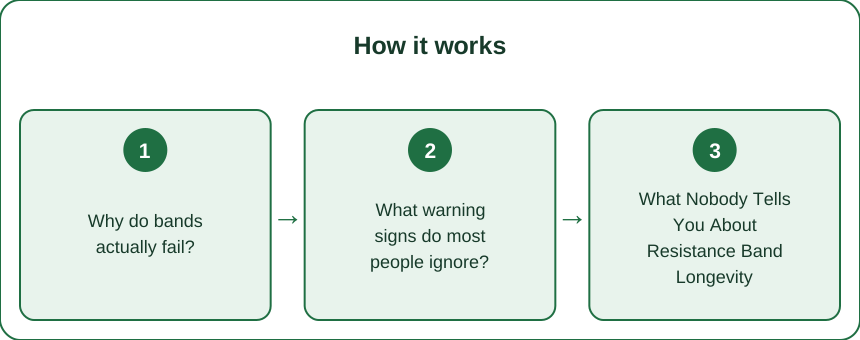
Why do bands actually fail?
Three main causes: UV and heat exposure (bands stored near a sunny window or in a hot car degrade the rubber polymer faster than most people realize), micro-tears from sharp contact (jewelry, long nails, rough flooring, or even a rough edge on a door anchor), and over-stretching past the 2.5-3x resting length most bands are rated for.
Any one of these weakens the material at a specific point, and that weak point is where the eventual snap happens — often during a moment of peak tension, like the bottom of a squat or the far point of a row.
What warning signs do most people ignore?
Visible thinning or a cloudy, matte patch on what should be a uniform, glossy rubber surface — that’s a sign of UV degradation in progress. Small nicks or pinholes, even tiny ones, are stress points that grow with every use.
A band that’s started to feel slightly tacky or sticky rather than smooth is also breaking down at a molecular level — this texture change is one of the most commonly ignored early signs before a snap.

What Nobody Tells You About Resistance Band Longevity
Here’s the part most product pages don’t mention: average resistance bands have a real lifespan of about 6-12 months of regular use, not indefinitely, even with good care. Treating them like permanent equipment (the way you’d treat a dumbbell) is the root mistake behind most snapping injuries.
Budgeting for replacement every 6-12 months, rather than waiting for visible failure, moves you from reactive to preventive — the cost of a new band is far lower than the cost of an eye or face injury from a snap.
What should a pre-workout safety check actually involve?
Before each use: stretch the band about 50% of its length and visually scan the entire length for thinning, cloudiness, nicks, or stickiness — this takes about 10 seconds and catches most developing problems.
Also check your anchor point every time (door anchors, in particular, can fray or the door hinge can create a pinch point) and remove rings, bracelets, or long nails before handling bands under tension.
FAQ: Resistance Band Safety Questions, Answered
How should I store resistance bands to make them last longer?
In a cool, dark place away from direct sunlight and heat — a drawer or closet, not a hot car trunk or a sunny windowsill, which significantly accelerates rubber degradation.
Is latex or fabric resistance band safer?
Fabric bands don’t snap the same way latex does, making them a lower-risk option for face-level or high-tension exercises, though they stretch less overall.
What should I do immediately if I notice a nick or thin spot?
Retire that band immediately rather than ‘monitoring’ it — a visible weak point only gets worse with continued use, and the cost of replacement is trivial compared to an injury.
TL;DR:
- Bands snap from UV/heat degradation, sharp-object nicks, and over-stretching, not bad luck
- Watch for thinning, cloudy patches, pinholes, or a sticky texture — all early warning signs
- Average lifespan is 6-12 months of regular use, even with good care — budget to replace, don’t wait for failure
- A 10-second stretch-and-scan before every use catches most problems before they become injuries
Do the stretch-and-scan check on your current bands right now, before your next session.
Keep Reading
This article is for general informational and styling purposes only. Fit, sizing, and product availability may vary.