Why Resistance Bands Snap — and the 4 Habits That Actually Prevent It
Quick Answer: Bands snap most often from UV/heat degradation, over-stretching past the rated range, and sharp anchor points that nick the material over time. Store bands away from sunlight, stay within the stated stretch range, and inspect for small nicks before every session.
A snapping resistance band feels random when it happens — one day it’s fine, the next it fails mid-set. But band failure almost always has a traceable cause, and most of those causes are avoidable with a few consistent habits.

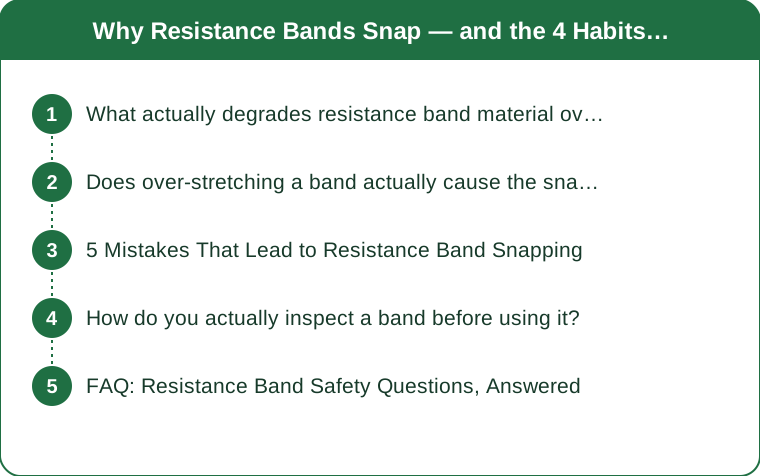
What actually degrades resistance band material over time?
UV exposure and heat are the biggest silent killers — latex and rubber bands left in direct sunlight or a hot car break down chemically over weeks, becoming brittle and losing elasticity even without visible damage. This is why a band that looks fine can still fail unexpectedly if it’s been stored somewhere hot or sunny.
Cold also matters: bands stored in freezing conditions can become stiff and more prone to cracking on the first stretch of a cold session.
Does over-stretching a band actually cause the snap, or is it usually a defect?
Usually over-stretching, not a defect. Every band has a rated maximum stretch range (often around 2.5-3x its resting length) — stretching consistently near or past that limit, especially under sudden force like a fast release-and-recoil movement, is one of the most common causes of failure, especially over repeated sessions.
A band that’s rarely stretched past 2x its resting length will typically last far longer than the same band regularly pushed to its rated max.

5 Mistakes That Lead to Resistance Band Snapping
1. Anchoring on sharp or rough edges — a doorframe corner or textured pole can nick the material invisibly, weakening it at that exact point.
2. Storing bands in direct sunlight or a hot car.
3. Using a band well past its rated resistance level for your exercise instead of sizing up to a heavier band.
4. Skipping visual inspection before use — small tears or thin spots are often visible if you actually look.
5. Continuing to use a band after the first small nick appears, instead of retiring it.
How do you actually inspect a band before using it?
Stretch it slightly and look for thin spots, discoloration, or small tears, especially near the ends where anchoring stress concentrates. Run your fingers along the length feeling for any rough or weakened patches you can’t see clearly.
This takes under 30 seconds and is the single most effective habit for catching a band before it fails mid-set rather than after.
FAQ: Resistance Band Safety Questions, Answered
How long do resistance bands typically last?
With proper storage and moderate use, 1-2 years is common; heavy daily use or poor storage can cut that significantly shorter.
Is it safe to anchor a resistance band on a door?
Only with a proper door anchor attachment — looping a band directly around a door edge creates a sharp pressure point that accelerates wear and increases snap risk.
Should I replace a band at the first sign of a nick?
Yes — a small nick is a structural weak point that will worsen with continued use, and the cost of replacement is far lower than the risk of a snap under tension.
TL;DR:
- UV and heat exposure silently degrade band material even without visible damage
- Stretching consistently near a band’s rated maximum accelerates failure
- Sharp anchor points nick material and create weak points
- A 30-second visual and feel check before each use catches most failures before they happen
A snapping band is rarely bad luck — it’s almost always a traceable habit. Fix the habit and the bands last years longer.
Keep Reading
This article is for general informational and styling purposes only. Fit, sizing, and product availability may vary.