The 3-Point Safety Check for Anchoring Resistance Bands to a Door
Quick Answer: Check the door anchor is on the opposite side of the door from you (not just wedged in the frame), confirm the door is fully closed and latched, and inspect the band itself for any visible wear before every session — all three take under 30 seconds combined.
Door-anchored band workouts are popular because they’re convenient — no gym, no rack, just a door. That convenience comes with a real, specific risk if the anchor setup is rushed, and the fix is a genuinely fast habit, not a hassle.

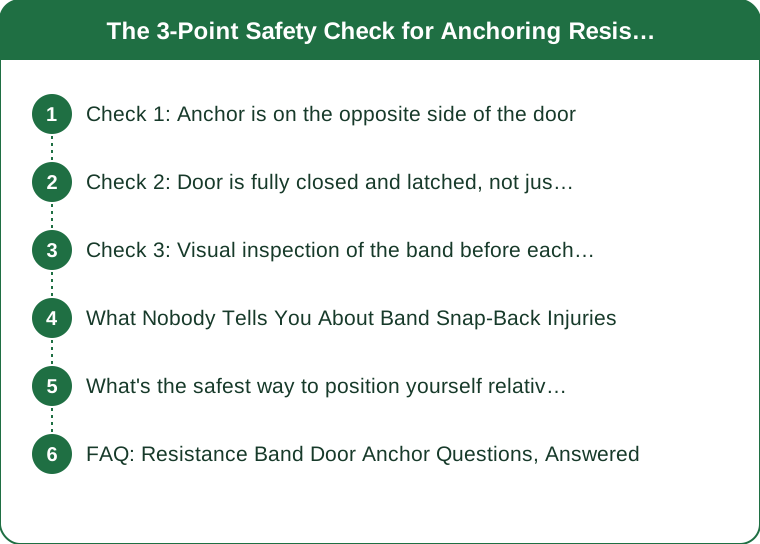
Check 1: Anchor is on the opposite side of the door
The anchor attachment should hook over the top of the door with the bulk of the anchor resting on the opposite side from where you’re pulling — this uses the door itself as the resistance point. An anchor wedged only in the door frame without this opposite-side counterweight is a common setup mistake that significantly increases slip risk under load.
Check 2: Door is fully closed and latched, not just shut
A door that’s closed but not actually latched can shift or swing slightly under tension, changing the anchor angle mid-exercise and increasing snap-back risk. Always verify the latch caught, not just that the door looks shut — this takes two seconds and removes a real point of failure.
Check 3: Visual inspection of the band before each session
Bands degrade with UV exposure, temperature extremes, and repeated stretching — check for any small tears, thinning spots, or discoloration before use, since a compromised band is far more likely to snap under tension than a new one. Replace a band showing any visible wear rather than using it until it fully fails, which usually happens under load, not at rest.

What Nobody Tells You About Band Snap-Back Injuries
Most band injuries happen at the moment of release, not during the pull. A band that slips off an anchor or that a person releases from full stretch (rather than controlling it back to neutral) is the most common mechanism — always control the band back to a relaxed position rather than letting it snap back on its own.
What’s the safest way to position yourself relative to the anchor?
Stand facing the anchor point directly, not at a sharp angle — an angled pull redirects force in a way that can pull the anchor loose even when the door and hook setup is otherwise correct. If the exercise requires an angled pull, re-anchor at that angle rather than pulling across from a straight-on anchor.
FAQ: Resistance Band Door Anchor Questions, Answered
How often should resistance bands be replaced?
With regular use, most latex bands show meaningful wear within 6-12 months — inspect monthly and replace at the first sign of thinning or tears, not after a full snap.
Is a door anchor as safe as a wall-mounted anchor?
A properly checked door anchor is reasonably safe for most home use, though a permanent wall or rack-mounted anchor removes the door-specific failure points entirely if you’re doing frequent, heavy band work.
What should I do if a band snaps during an exercise?
Stop immediately, check for any skin contact injury, and discard that band — a band that snapped once has already failed and shouldn’t be reused even if it looks intact afterward.
TL;DR:
- Anchor should sit on the opposite side of the door from you, not just wedged in the frame
- Confirm the door is latched, not just closed — an unlatched door can shift under tension
- Inspect the band for wear before every session, not just when it looks obviously damaged
- Control the band back to neutral rather than letting it snap back on release
Keep Reading
This article is for general informational and styling purposes only. Fit, sizing, and product availability may vary.