The Resistance Band Color-Coding Myth That's Confusing Your Workouts
Quick Answer: There is no universal standard for resistance band color-to-weight coding — a ‘red’ band from one brand can be lighter than a ‘yellow’ band from another, so judging resistance by feel and rep performance matters far more than matching colors across brands.
You grabbed what you thought was your usual ‘medium’ band from a different set, and the workout felt completely different — not because your strength changed, but because color coding isn’t standardized industry-wide.

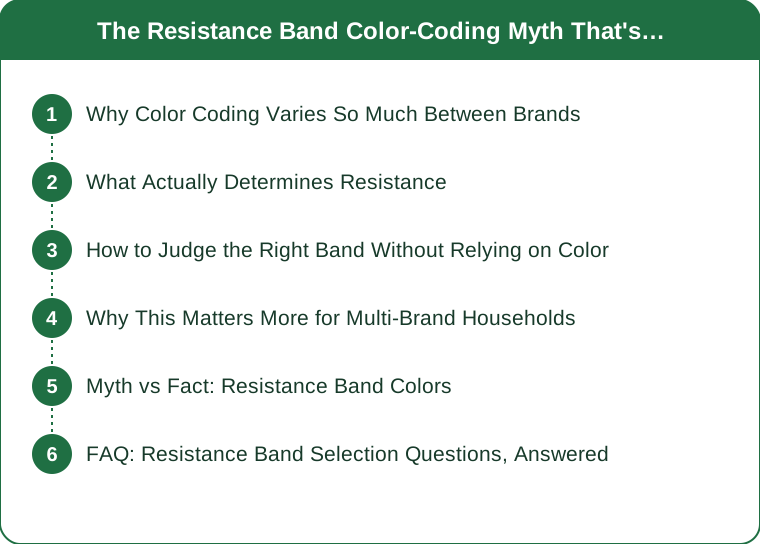
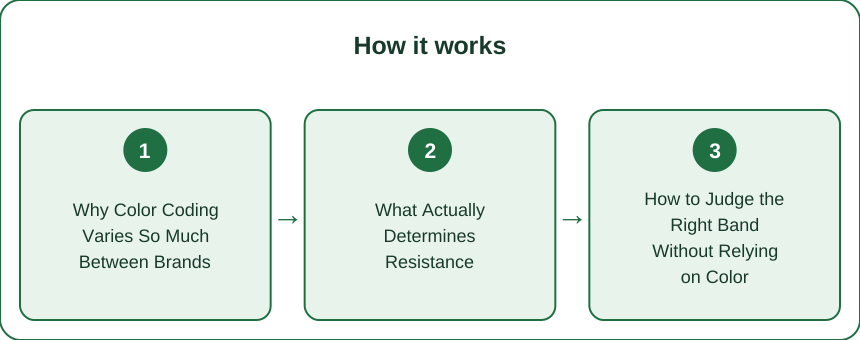
Why Color Coding Varies So Much Between Brands
Each manufacturer sets its own color-to-resistance-level system based on that brand’s specific product line, with no shared industry standard dictating that ‘green’ or ‘blue’ must mean any particular resistance range. This means color is only meaningful within a single brand’s own set, not across brands.
What Actually Determines Resistance
Band resistance comes from material thickness and width, not color — a band’s actual resistance is typically listed in pounds or kilograms on the packaging or brand website, and that number is far more reliable than color when comparing across brands or even within a brand’s different product lines.
How to Judge the Right Band Without Relying on Color
Test any new band with a rep range you know well (like 12-15 standing rows) — if you can’t complete 8 reps with reasonable form, it’s too heavy for that exercise; if you can easily do 20+ reps without fatigue, it’s too light. This rep-based test works regardless of what color the band happens to be.

Why This Matters More for Multi-Brand Households
If you’ve accumulated bands from different sets over time (a common pattern with gift sets, gym freebies, and online purchases), your ‘usual’ color combination almost certainly doesn’t mean the same resistance level across all of them — worth doing a one-time resistance check-in across your whole collection.
Myth vs Fact: Resistance Band Colors
Myth: Darker colors always mean heavier resistance. Fact: some brands do follow a light-to-dark progression, but plenty don’t — there’s no guarantee darker equals stronger without checking that specific brand’s chart.
Myth: Once you learn one brand’s colors, you understand bands generally. Fact: that knowledge is brand-specific and can actively mislead you when using a different brand’s bands.
FAQ: Resistance Band Selection Questions, Answered
Where can I find the actual resistance rating for my bands?
Check the original packaging, brand website product page, or search the specific product name plus ‘resistance rating’ — most legitimate brands do publish pound ratings even if they’re not printed directly on the band.
Should I buy bands from just one brand to avoid confusion?
It simplifies tracking, but it’s not necessary — just get in the habit of checking pound ratings rather than color-matching when combining brands.
Do bands lose resistance strength over time?
Yes — repeated stretching and UV exposure gradually degrade elastic resistance bands, so a band that felt right a year ago may now be measurably weaker even at the same color and brand.
TL;DR:
- Resistance band color coding is brand-specific, not a universal standard
- Actual resistance is determined by material and thickness, listed in pounds/kg
- Use a known rep range test to judge a band’s real resistance, not its color
- Check pound ratings especially if your bands come from multiple brands or gift sets
Color is a convenient shorthand within one brand’s own product line, but treating it as a universal resistance scale is where the confusion — and the mismatched workouts — actually come from.
Keep Reading
This article is for general informational and styling purposes only. Fit, sizing, and product availability may vary.