The Resistance Band Anchor Point Check You Should Never Skip
Quick Answer: Before every resistance band session, check that the anchor point (door anchor, bracket, or fixed object) is rated for the band’s pull force, that the door anchor is on the correct side of a closed and locked door, and that the band itself has no visible nicks or thinning — skipping this 30-second check is behind most anchor-related band injuries.
A snapped band or a failed anchor point under tension can happen fast and hurt badly. The good news is that nearly all of these incidents are preventable with a quick check before you start pulling.

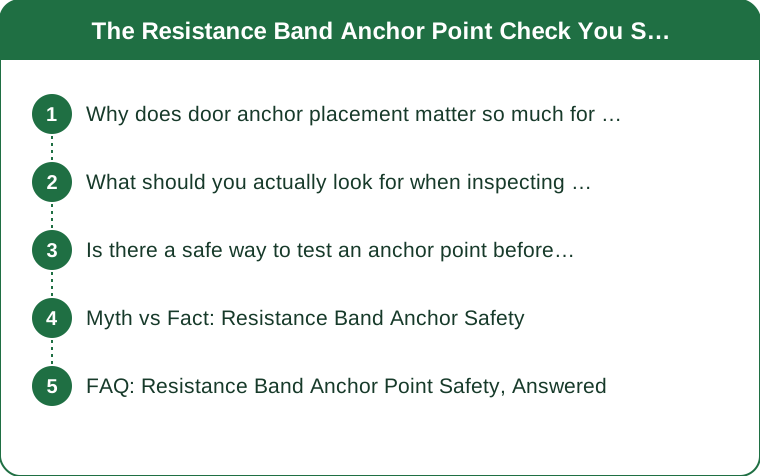
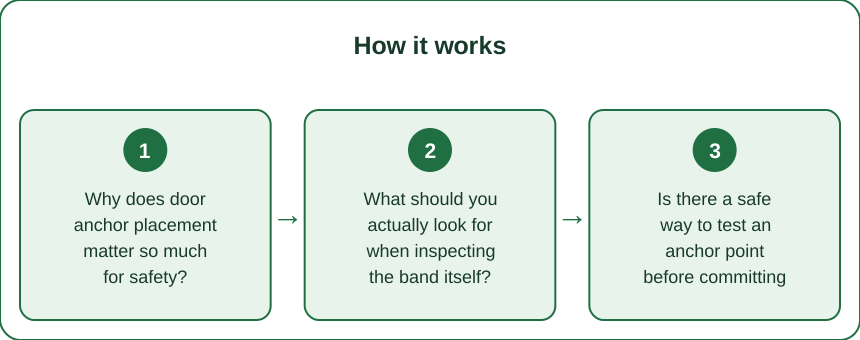
Why does door anchor placement matter so much for safety?
A door anchor works by wedging a strap between the door and frame, which only holds securely if the door is closed and, ideally, locked — an unlocked or slightly ajar door can swing open mid-pull, releasing tension suddenly and unpredictably. Checking that the door is fully closed and locked before attaching a band is a simple step that prevents one of the more common band-related accidents.
What should you actually look for when inspecting the band itself?
Small nicks, visible thinning, or a slightly tacky or overly stretched-out feel in the rubber are all signs a band is nearing the end of its safe usable life. Bands degrade with UV exposure and repeated use, and a band that looks fine at a glance can still be significantly weaker than a new one — running your fingers along the full length before use catches most of these issues.

Is there a safe way to test an anchor point before committing to a full-effort pull?
Yes — pulling to about 25-50% of your intended tension first and holding briefly lets you feel whether the anchor point is secure before loading it fully. This brief test catches loose door anchors, unstable furniture anchors, or any give in the anchor point before you’re mid-rep at full intensity.
Myth vs Fact: Resistance Band Anchor Safety
Myth: If a door anchor came with the resistance band set, it’s automatically safe for any door. Fact: Anchor safety depends on the specific door and frame, not just the anchor accessory — always check the door itself, regardless of what anchor you’re using.
Myth: A band that looks fine visually is safe to use at full tension. Fact: Internal rubber degradation isn’t always visible — age and total use matter alongside visual inspection, so replacing bands periodically regardless of appearance is a reasonable precaution.
FAQ: Resistance Band Anchor Point Safety, Answered
How often should resistance bands actually be replaced?
Most manufacturers suggest replacing bands every 6-12 months with regular use, or sooner if any nicks, thinning, or reduced elasticity are noticed.
Is a wall-mounted anchor point safer than a door anchor?
A properly installed wall-mounted anchor rated for the load is generally more reliable than a door anchor, since it removes the variable of door security entirely.
What should I do if a band snaps during a workout?
Stop immediately, check for any injury, and discard the band — a band that snapped once has already shown it’s past safe use, even if the remaining piece looks intact.
TL;DR:
- A closed, locked door is essential for safe door-anchor resistance band use
- Inspect the band for nicks, thinning, or unusual texture before every session
- Test the anchor at partial tension before committing to a full-effort pull
- Replace bands every 6-12 months regardless of how they look
A 30-second anchor and band check before your first pull is the cheapest injury prevention step in resistance training.
Keep Reading
This article is for general informational and styling purposes only. Fit, sizing, and product availability may vary.